
How to Fall Asleep Tonight Naturally: Simple, Calm Ways to Sleep Without Medication
If you’re searching how to fall asleep tonight naturally, you’re likely tired but still awake. I’ve had nights like that too, where my body is ready for sleep but my mind won’t slow down, especially during stressful seasons or when I’m waking up hot or anxious.
The goal tonight is not to force sleep. It’s to gently help your body settle so sleep can come on its own.
If waking during the night is your main issue, you may also want to read why do I wake up at 3 a.m. every night.
A Quick Truth About Sleep
Sleep doesn’t usually come from trying harder.
It comes when your body feels calm, safe, and unpressured.Tonight, focus on relaxing instead of forcing sleep.
Why You Might Not Be Falling Asleep Tonight
A few common reasons:
- Mental stress or overthinking
- Feeling physically hot or uncomfortable
- Screen exposure late at night
- Caffeine or heavy meals
- Disrupted sleep routine
- Nervous system overstimulation
According to Sleep Foundation, stress and inconsistent habits are leading causes of difficulty falling asleep.
What’s Happening in Your Body Right Now
If you can’t fall asleep, your body may still be in an alert state.
Your body has two main modes:
- an alert state (thinking, problem-solving, stress)
- a relaxed state (rest, recovery, sleep)
If you’re lying awake, it usually means your body hasn’t fully shifted into that relaxed state yet.
Your body also follows a natural sleep-wake rhythm, and stress, light exposure, or routine changes can disrupt it.
That’s why the goal tonight isn’t to force sleep – it’s to help your body feel calm enough to allow it.
What to Try First Based on How You Feel
| If this sounds like you | Try this first |
|---|---|
| My mind is racing | Write thoughts down, then breathe slowly |
| I feel hot | Fan, lighter blanket, cooler room |
| I feel anxious | Grounding exercise + no clock checking |
| I feel wide awake | Get up briefly in dim light |
| I feel hungry | Light snack, not a heavy meal |
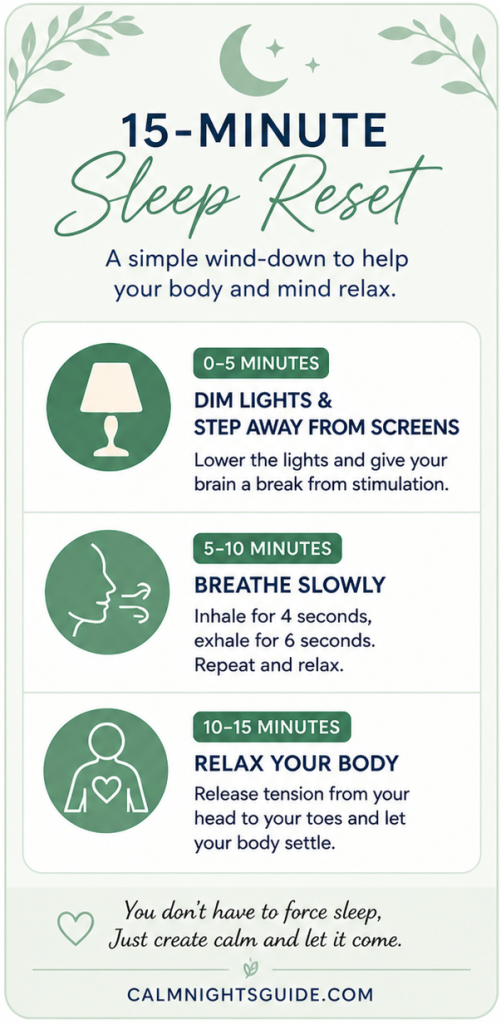
A Simple 15-Minute Wind-Down
First 5 minutes
- Lower lights
- Step away from screens
Next 5 minutes
- Breathe slowly (in for 4, out for 6)
Last 5 minutes
- Relax your body from head to toe
Then lie still and let your body settle.
Less Common Techniques That Can Actually Help
These are not talked about as often, but they can make a real difference.
The “Stop Trying” Technique
If you feel desperate to fall asleep, try the opposite.
Tell yourself:
“I’m just going to rest. I don’t need to fall asleep right now.”
Removing pressure often allows sleep to come.
The Cognitive Shuffle
If your thoughts won’t stop, gently list random, unrelated things in your mind:
- Apple
- Chair
- Blue car
- Tree
Keep it random, not logical.
This helps interrupt overthinking.
Warm → Cool Body Shift
A slight temperature drop can make you feel sleepy.
Try:
- Warm shower before bed
- Then enter a cooler room
This change helps signal your body that it’s time to rest.
Eyes Open in the Dark
If closing your eyes makes your mind race, try lying in the dark with your eyes slightly open.
Soft focus, no effort.
This removes pressure and can help sleep come naturally.
Stay Still Instead of Tossing
Constant movement can keep your body alert.
Pick one comfortable position and stay there for a few minutes. Stillness can help your body settle.
Techniques That Help You Fall Asleep Naturally
Slow Breathing
Inhale for 4 seconds, exhale for 6 seconds.
Cleveland Clinic notes this can reduce stress and help the body relax.
Mental Offload
Write down what’s on your mind so your brain doesn’t have to hold it.
Gentle Relaxation
Tense and release each muscle group slowly.
Sound Environment
Try fan noise, rain sounds, or soft background audio.
If You’re Still Awake Later
If you feel frustrated, get up briefly and do something calm in dim light.
Return when sleepy.
🎥 Try this while you’re lying in bed:
If your mind won’t quiet down, soft background sounds can help create a sense of calm. This gentle rain video is simple, steady, and doesn’t require any focus—just press play and let it run.
What Helps Tonight vs What Helps Long-Term
Tonight
- Lower stimulation
- Calm breathing
- Reduce pressure
Long-Term
- Consistent sleep schedule
- Morning sunlight exposure
- Limiting caffeine later in the day
Even 10–20 minutes of daylight during the day can help regulate your sleep cycle.
How Exercise and Light Affect Your Sleep Tonight
Two things that happen during the day can make falling asleep tonight much easier: movement and light exposure.
Getting even light exercise during the day—like walking, stretching, or being active around the house—can help your body feel more ready for rest at night.
Natural light is just as important. Your body uses daylight to help regulate your internal sleep-wake cycle. Even 10 to 20 minutes of sunlight earlier in the day can make a difference in how sleepy you feel later.
If you’ve been indoors most of the day or not moving much, your body may not feel as naturally ready for sleep tonight—and that’s okay. It just means tomorrow is another chance to support better sleep.
What to Expect When Falling Asleep Naturally
Most people fall asleep within about 10 to 20 minutes, but it can take longer during stress, schedule changes, or hormonal shifts.
Natural sleep methods don’t force sleep – they help your body become ready for it.
It’s also normal for your mind to wander or for sleep to come in waves. You may feel like you’re still awake even as your body begins to drift.
This is part of the natural process, not a sign that something is wrong.
If Hormones or Waking Hot Are Part of the Problem
If you feel hot, restless, or more anxious at night, hormones may play a role.
A cooler room, lighter bedding, and breathable clothing can make a noticeable difference.
If You Wake Up During the Night
- Stay calm
- Avoid checking the time
- Use slow breathing
- Get up briefly if needed
What I Personally Do on Difficult Nights
On nights when I can’t fall asleep, I stop trying to make sleep happen. I dim the room, keep things quiet, and focus on resting.
I’ve had nights where I felt completely exhausted but still wide awake, and I noticed the harder I tried to fall asleep, the worse it got.
What helped most was letting go of that pressure and allowing my body to settle naturally.
Many times, sleep comes once I stop chasing it.
A Quiet Way to Find Peace Before Sleep
For me, sometimes the most calming thing is simply letting go of the day.
“In peace I will lie down and sleep, for you alone, Lord, make me dwell in safety.” — Psalm 4:8
You don’t need long prayers—just a quiet moment of releasing what you’re carrying.
What If Sleep Doesn’t Come Tonight? If sleep takes longer than expected:
- Rest still benefits your body
- One bad night won’t harm your health
- Your body can recover quickly
- Tomorrow can still be manageable
Even a quiet night of rest can restore more than you think.
Many people go through periods like this—you are not alone.
And often, the less pressure you feel about sleep, the more likely it is to come.
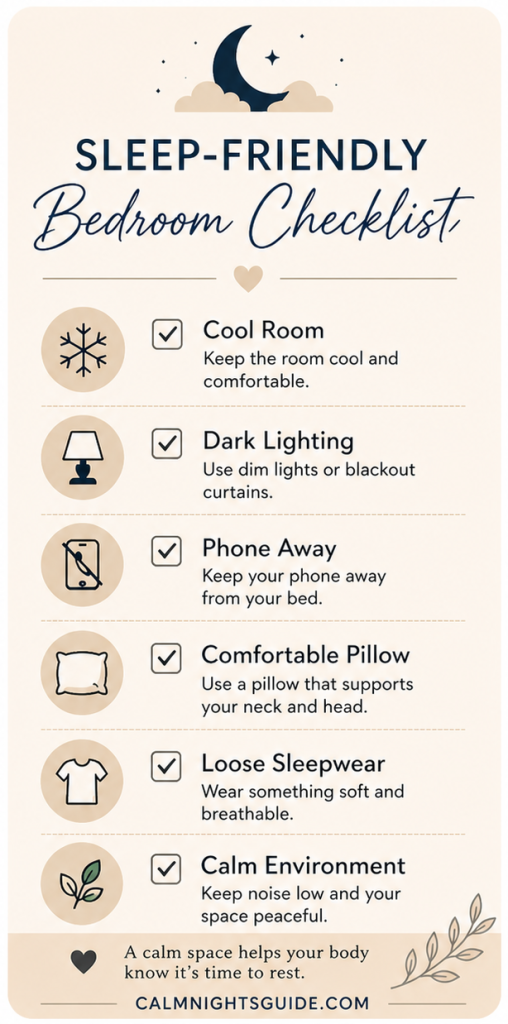
Bedroom Checklist for Falling Asleep Naturally
- Cool room
- Dark lighting
- Phone away from bed
- Comfortable pillow
- Loose clothing
- Calm environment
When to Get Help
If sleep issues happen most nights for weeks or affect your daily life, it may be time to talk with a healthcare provider.
Mayo Clinic and CDC both recommend evaluation for ongoing sleep problems.
FAQs
How can I fall asleep naturally tonight?
Reduce light, avoid screens, breathe slowly, and allow your body to relax without pressure.
Why can’t I fall asleep even when I’m tired?
Stress, overstimulation, and irregular sleep habits are common causes.
Is it better to stay in bed if I can’t sleep?
If you feel frustrated, getting up briefly can help reset your body.
What helps you fall asleep without medication?
Calming the body through breathing, reducing stimulation, and creating a comfortable sleep environment.
How long should it take to fall asleep naturally?
Most people fall asleep within 10 to 20 minutes, though it can take longer during stress or routine changes.
Why does my brain get active at night?
Nighttime often brings fewer distractions, allowing your mind to process thoughts more actively.
What should I do if I can’t sleep and have to wake up early?
Focus on resting your body instead of calculating sleep time. Avoid clock checking and keep your body calm.
Final Thoughts
If you’re awake right now, nothing is broken.
Your body already knows how to sleep. Tonight isn’t about forcing it — it’s about creating a little more calm and giving it the space to happen.
Start with one small step. Dim the room. Slow your breathing. Let go of trying to control the outcome.
Sleep often comes quietly, when the pressure is gone.
If you’re comfortable sharing, I’d love to hear from you –
What usually keeps you awake at night, or what has helped you the most?
Your experience might help someone else feel less alone.
Read Next
- Why Do I Wake Up at 3 A.M. Every Night?
- Why Do I Wake Up Hot at Night?
- How to Calm Anxiety Before Bed
- Best Natural Bedtime Routine for Adults